Umzumbe Municipality

uMaspala waseMzumbe

Building a better future

Mon – Thurs

08:00-16:30

Fridays

07:30-16:00

Tourism Sites

ISIVIVANE SIKASHAKA

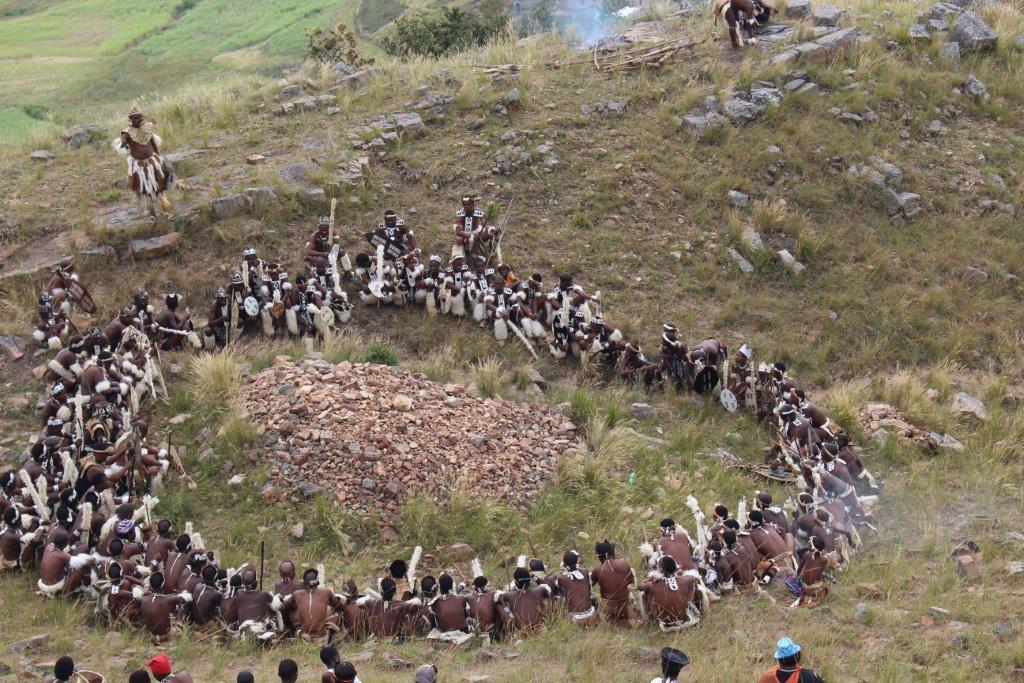
Isivivane sikaShaka is a heap of stones found in ward 15, Kwa-Qoloqolo that traces the journey of the last expedition by King Shaka Zulu in May 1828. In 1827, September, King Shaka sent spies to study the status of King Faku’s army in the Pondoland, now Eastern Cape, with the aim of attacking. In 1827, October, queen Nandi, the mother of King Shaka passed away and the Zulu nation had to undergo a year moaning. In this mourning period Shaka ordered that no crops should be planted during the following year and no milk was to be used.

 Also a cleansing ritual had be undertaken, either through a hunting expedition or attacking an enemy and wash the spear by spilling the blood of an enemy. The latter was the choice; King Faku had to be attacked. King Shaka sent his impi (army) to Pondoland as ihlambo (cleansing ritual) in the beginning of May 1828.

On the way to Pondoland, King Shaka’s army camped at several places. One night they stayed in an area called Qoloqolo (meaning the black ache, as it is extremely difficult to climb the hill). King Shaka named the river in the valley, Mthwalume River and the area Mthwalume. The army consisted of maybe as many as 50 000 soldiers in several regiments. All these soldiers, under the lead of King Shaka and his general Manyundela, camped overnight at the hills of Mathwalume.

ITSHE LA MARIYA

Itshe La Mariya is a site found in ward 8, Kwa-Mgai eTsheni location. The area is situated under Duma Tribal Authority in Umzumbe Municipality. Itshe La Mariya was the result of the breaking of the stone when the valley was formed millions of years ago, geologically. In depicts the picture which the locals have associated with Maria, the mother of Jesus, while holding Jesus, as the baby. That is why the site is referred to as ‘Itshe La Mariya’. The first identification and visit was by cattle herders (local boys) around 1950’s, the current community members’ ancestors.

St JOACHIMS ROMAN CATHOLIC CHURCH

St Joachims Roman Catholic Church was formed in 1903 under St Joachims Mission and temporary church building were built. The old church is now located in an area under Ndelu Traditional Council. The new church was built in 1971 on the land of Sacred Heart Mission. Both sites are located in ward 14 in Umzumbe municipality.

The white farmer Mr Farrell, who is originally from the area, donated the site called Devonna where the church permanent buildings were built in 1919 and the site was called ‘St Joachims Mission’. Joachim was one of the Saints who was the father of Maria (Mary) Jesus’s mother. It is said that the first Priest was Frauz Mayr (1902 to 1903 Founder) from Netherlands. After a year, he was replaced by German Priest Abbott Frances Pfanner.

In 1919 the mission was placed under the control of Sisters Association of Benedict Association. The Association regarded itself as ‘Cari-Marie’ meaning Maria, the woman of the peace, as their representative.

The missionaries of the Sacred Heart are a missionary congregation in the Catholic Church. It was founded in 1854 by Father Jules Chevalier as Issoudun, France in the Riocase of Bourges. He had a vision of a new world emerging and he wanted to make known the Gospel message of God’s love and care for all human beings. The Missionary headquarters is in Rome (in Italy) with numerous communities throughout the world.

Sacred Heart school had the influence of both Sacred Heart Mission and St Joachims Mission. The school is still operational but under the government now.

NTELEZI MSANI

The 1906 Mthwalume Poll Tax Uprising Commemoration is an annual event that seeks to remember and honor the 36 leaders and community of uMthwalume area who vehemently opposed the imposition of one pound Poll Tax over Zulu males which was payable as from 1906. This was viewed as South Africans as a way of the colonial government to force African people to work in the white owned farms and mines supplying cheap labour as well as settling the dept of the Natal Colonial government incurred during the British-Boer war of 1902. The vent has been held since 2008 as a human rights commemoration within Ugu District. The event is held at Ntelezi Msani Heritage Centre in ward 10 under uMzumbe Municipality. The Centre has been established and named in honor of the 1906 Poll Tax stalwarts and keeping their contributions against human rights atrocities known by all generations.